
In memoriam
This website was precious to my dear husband Halldor Gislason – He loved to communicate, inspire and share ideas and good projects. Dori sadly passed away on the 8th of December 2013 after two and a half years of fighting brain cancer.Â
Dori was the most energetic, enthusiastic and life loving man I have known and I know he lives on in the minds and hearts of all the people that knew him. I want to keep the site open so his writing can continue to be an inspiration.
Dori’s brain cancer attacked his writing and reading skills. But he was a fighter and continued to publish posts until his ability to read and write was all gone.
The site was down for a while because the initial domain dorigislason.com was hijacked and difficult to get back. So now the site has the domain dorigislason.net
Soley Stefansdottir
For contact: soleyst(at)mac.com

 May 14, 2014
 Posted in: Uncategorized
  Comments Closed
ICELAND BETTER WORLD – PROTECTED FROM BAD ENVIRONMENT DEVELOPMENT
 From a presentation in fron of the parliament on the first day of May. People looking at providing a better world looking after the environment. Here are more images from the event posted on the internet.

The town building in centre of Reykjavik in Iceland. This image shows the hose of parliament (the black one) and the church where they meet up when they pretend they are serious using religion ha ha.
The statue on left there is a Jón Sigurðsson, one of the prominent for Iceland in the end of 18th century. But the image nicely displays the presentation of the beautiful images promoting a new potential Iceland that will not be completely covered by business and foreign companies. But of course one never know how it will go. But we have to live in positive minds ha ha.
May 1, 2013
Posted in: DESIGN, ICELAND Comments Closed
YARA PROJECT IN ICELAND SCHOOL
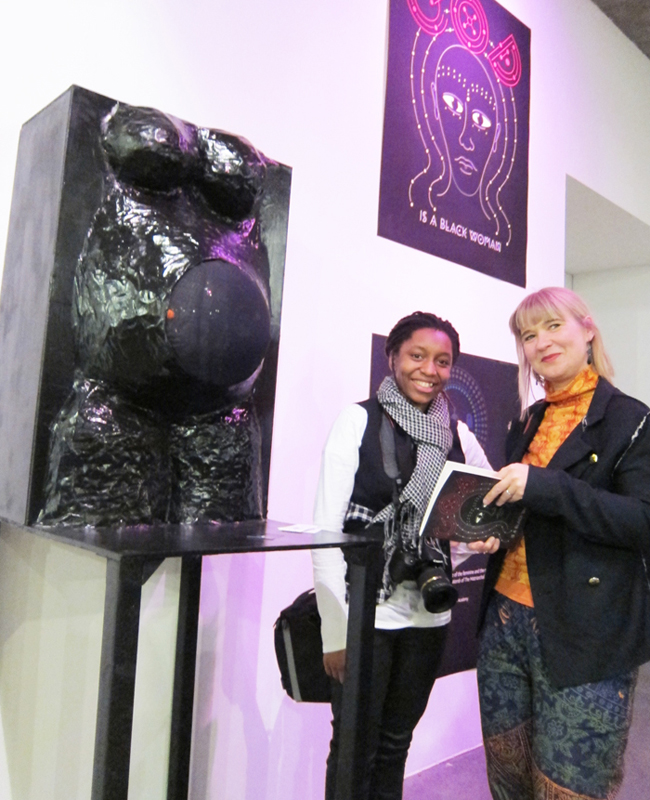
My student Yara is completing her project in the school in Iceland. This is a coposition of material that brings dialogue that brings information and stories about culture and visual language.
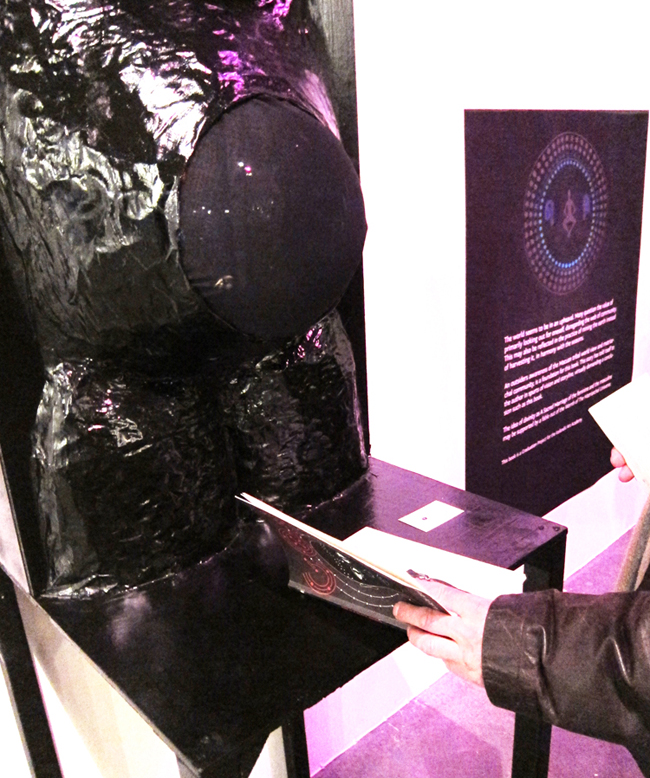
The piece with the project description and text presentation. The most funamental material is the book that is being displayed with the project.
April 27, 2013
Posted in: AFRICA, ARCHITECTURE, ICELAND, ISAC - KHiO No Comments
END OF THE YEAR SHOW IN ICELAND ACADEMY
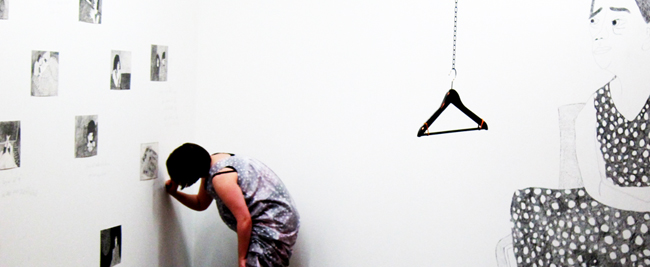
Present operation going on
The Iceland Design Faculty opened the exhibition of the student work after winter 2012-13. The school is going through fundamental changes and development this year and next so I was worried about the contents from the work but the results lifted my opinions. The students have showed that they can survive although the institute is going through development changes. Now the school is going through changes and has been appointed a new rector director that is time for fundamental changes that have to happen regularly in such institutes. I enclose a link to images of the exhibition and of cours am especially proud of my Mozambican student hopefully completing here participation this year before returning to Maputo for design development with our there local students.
Images are here on this ling. - Click on this for much more images.
April 23, 2013
Posted in: ARCHITECTURE, ART, DESIGN, ICELAND Comments Closed
MORE ACTION IN MOZAMBIQUE
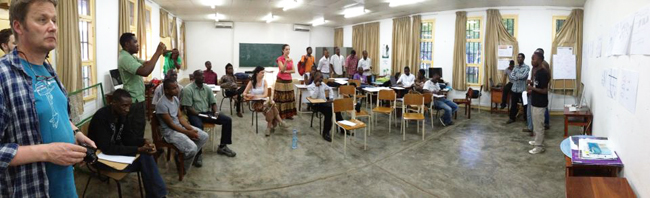
Klass meeting planning project and starting operations. Guests from our Norway school and local students and teachers in Maputo
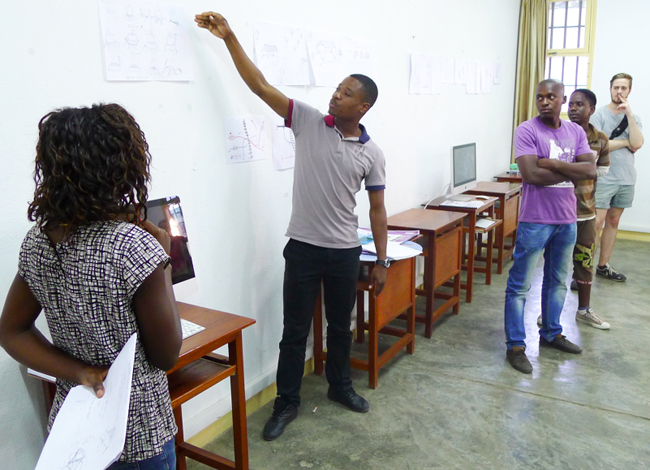
Presentation and dialogue from students.
Collaboration between ISArC and KHiO (http://www.khio.no/Norsk/Design/)
The projects are going well among the local gang. We wait for more information later but fundamental is the participation and collective learning from one culture and method to the other. Great stimulation for all partners.
One more time we run a workshop in Mozambique. In ISArC (http://www.isarc.edu.mz/)Â the new and stimulating new school. It is now six years since I arrived in town first time and now we have graduated students in action and the work is focused well in the design direction.
This time there are four visitors with workshop with the local student and teacher gang. Here are a few images from the activity.
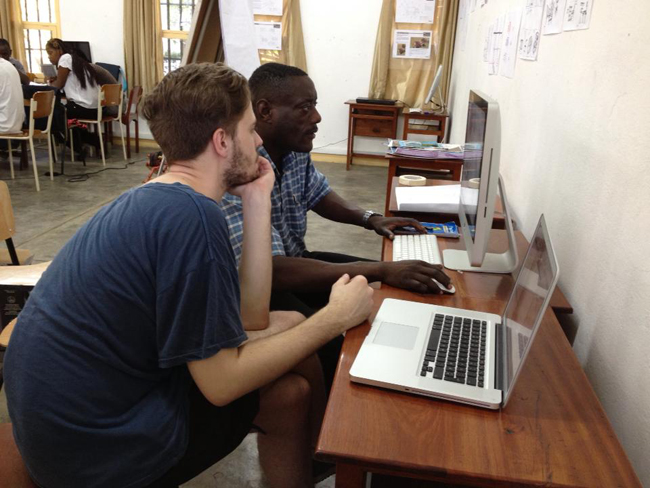
Digital hard work going on. There is strong need for communication media in the Mozambiqan system, needs for information development and support for government and free business. It is great that the students in design gain more experience in this direction to support further development. We do also collaborate more internationally between cultures and language has started to reduce problems. People are opening up communication from working together. We are impressed of the effort of the students in the school and we do actually collaborate greatly through internet almost every during the last few years. This is natural development globally and hopefully will continue.
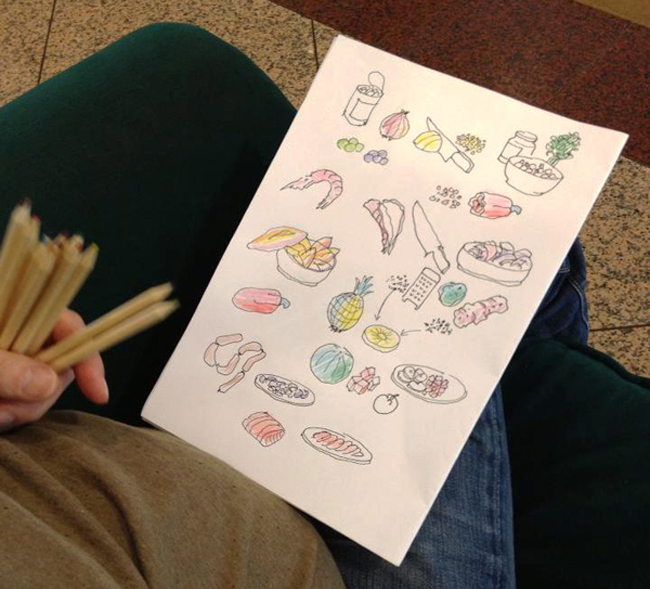
Digital work using information development and simple technique to distribute information simply and fast.
The workshop has gone on very intensively and the students have participated in great intensity. It is great when different cultures meet and work together. Both sides do actually gain from the sork since the conditions are so different and the dialoge that is needed about how to participate is different. But finally we are all working in similar material and in the same way of distributing and developing solutions that fit the culture lically.
April 18, 2013
Posted in: AFRICA, DESIGN, FASHION, ISAC - KHiO, MOZAMBIQUE, SUSTAINABILITY Comments Closed
DIFFERENT GROUPS OF PEOPLE – How to ask the right questions – THE NEW SCIENCE OF IMPACT

Where you are located directs how and where we operate. It is important for us to be interested in different groups of people. Something that most university members, educators, academic financers are not interested in. They seem only to know their own field. Sometimes we discard evidemce that tells something valuable. This is very common among academics that live in their own private and protected environment. Securely funded by their governments and institutes and those that judge are the olders that know not new or different measurements of results. In most universities we have members over 50 years old that do not follow the fast changing environment of innovation, communication, experimentation and success. This is especially a new condition that has arrived with the global linking that is happening through the internet. But those older are those who control most of the funds that are made available to experimentation and research. Very often today we overgeneralize results, drawing broad conclusions where it is inappropriate or impossible to do so.
How to ask the right questions.
The new science of IMPACT.
Evaluation of success is located in governal or official institutions that are not following what is actually happening in the world at large. A short example is the results of innovative activity that is happening among 15-20 year olds in digital and global activity. How are we going to deal with this? The older activities are loosing what is going on and even highly evaluated innovation istitutes are loosing what is actually going on.
Example: “Let’s start with the first question. Who is the target population for a microcredit intervention? Your answer will depend largely on where you sit: Academics and microfinance institutions will be interested in different groups of people. “
See the texts in the links, I am not reposting good investigation but promoting it.
February 4, 2013
Posted in: PONDERINGS, SUSTAINABILITY Comments Closed
”There is absolutely no economic crisis in corporate America.â€�
FOUR GANGS RUN USA.

The four business gangs that run the US
Military-industrial complex.
Wall Street-Washington complex.
Oil-transport-military complex.
Health-Care-Industry.
Jeffrey Sachs in his book, The Price of Civilisation, maintains that corporate wealth translates into political power. This is something I have lived all my life in my small country Iceland. This happens through campaign financing corporate lobbying between government and industry, in Iceland mostly fisheries and power development. This translates into further wealth through tax cuts, government benefits and sweethearth contracts. Sachs says that four key sectors of US business take over the governance through corporatocracy. In Iceland one knows the few that control the governance and shift their funds to foreign hidden funds to play more games.
The four that Jeffrey counts for USA are: 1) Military-industrial complex. 2) Wall Street-Washington complex run by a few politically powerful Wall Street Firms. 3) The big Oil-transport-military complex looking out over locations that provide while culture and the life of people is ignored. 4) Health-Care-Industry is number four and is America’s largest industry, absorbing no less than 17 per cent of US domestic production.
“Pharmaceutical firms set sky-high prices protected by patent rights; Medicare [for the aged] and Medicaid [for the poor] and private insurers reimburse doctors and hospitals on a cost-plus basis; and the American Medical Association restricts the supply of new doctors through the control of placements at medical schools.�
The result of this pseudo-market system is sky-high costs, large profits for the private healthcare sector, and no political will to reform.
Thes facts are the reason why the idustries made such an effort to overthrow Obama from control. Sachs says the main thing to remember about the corporatocracy is that it looks after its own. It was a revelation when I read that the cost of health industry per person in Cuba is only 6% of the cost per person in the US but the people in Cuba are no more sick than in the USA. It is all created needs and problems that we can deal with on our own if the specialists are not taken along.
January 16, 2013
Posted in: PONDERINGS Comments Closed
HALF OF WORLD’S FOOD IS THROWN AWAY

Figures from the Institution of Mechanical Engineers show that as much as two billion tonnes of food never makes it on to a plate. The food transport and commercial system shifts food globally and large quantities become damaged. Supermarkets and transporters throw away and much is thrown away in restaurants and homes. Here are links about these findings. BBC Link.
It is interesting and fundamental activity for creative and innovative actors to address the food issues locally and globally. This is something we have been doing on a small scale in our locations and I love watching news of interesting projects that are addressing this. Furthermore we must remember that the food we produce locally includes much more of the necessary material than the fast produced food from mass producers. Let me not start writing about the fruit and vedge commerce. Here is a link about solving the world’s ‘greatest solvable’ problem.

http://www.foodnavigator.com/ Â Link for more info
January 10, 2013
Posted in: PONDERINGS, SUSTAINABILITY No Comments
DESIGNERS ARE PARTNERSHIP BROKERS
Anne-Marie Slaughter writes about how the conditions are changing and we are designing our own profession. This might be a different condition to before. She discusses changes that have come with the digital world and then says:
“many old titles and jobs no longer make sense”
“A similar phenomenon is happening with traditional professions. Technologies that connect people to knowledge, services, and one another across the globe have acted as a centrifugal force, spinning functions and authority away from the center toward millions of previously silent and disempowered individuals. The result is that many old titles and jobs no longer make sense, and many new functions are just waiting to be claimed.�
She points out the changes that we are performing in the blog digital world:
“Today the function of finding information can be performed by crowd-sourcers; mappers of local sources; filters and curators of tweets, posts, and liveblogs; algorithm designers, data scientists, and knowledge managers.�
“PARTNERSHIP BROKERS”
She writes about PARTNERSHIP BROKERS: “governments, NGOs, foundations, and corporations are all investing in public-private partnerships and global collaborative networks�
She says that Partnership Brokers are those that “work as an intermediary building effective and innovative collaboration in non-traditional partnerships and cross-sectoral networks.â€�

To me this is pointing to those that use the open design methodological method of making things possible and active by connecting methods and philosophies between actors of various and often separate kinds. What has always stimulated me is the knowledge that the open minded designer is the one that knows nothing well but lots of things simultaneously. And knows how to employ and have dialogue with the experts in specialized fields so that things can be realized. It does not matter if it is business, philosophy or knowledge of traditional method but to know how to make things possible in collaboration to improve conditions and life. The methods are somehow collaborations and possibilities of co-employment of expertice. This condition is growing more every day with the opening of tools that support collaborations like the internet, inter communications etc. And what is also happening is that the young are bypassing very fast those that are still grounded in old rules and methods. One starts to meet youngs and actually very youngs that are friends on facebook or something similar and they co-operate globally. This I can confirm directly but do not spend time explaining except telling that one knows many parents of teenagers that do not understand why their kids are chatting globally about their interests on the internet.
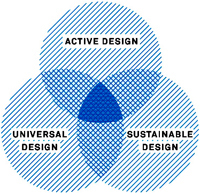
“DESIGN DEVELOPERS”
To operate in design development is extremely interesting these days cause of the shifts that one is experincing through students and actually non students but just actors. My feeling is that this condition is not finished or over but just the start of a completely different world that might be possible if we manage to address our current environmental disasters. And I trust more the young generation for that than the global companies.
In the design schools we have to address these new conditions and prepare our students for a completely different professional and real world than we the old teachers were prepared for. We have ways to address this. In our school in Oslo we run projects to prepare the designers of the future for a different world that we have no idea how will develop. Here is a sample of operating in the DEEFT project. I keep quoting Paola Antonelli about the role of Design in the coming decades for world development. See here.
DEEFT
January 4, 2013
Posted in: ARCHITECTURE, ART, DESIGN, PONDERINGS, SUSTAINABILITY Comments Closed
TALLIN ACADEMY WORKS
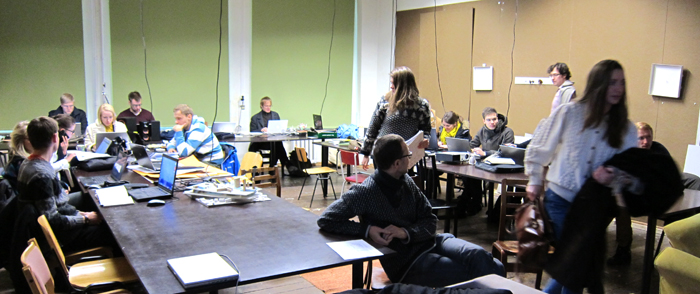
The students finishing the work before Xmas holiday for a few days before action starts again.
Lots of different work in the Academy in Tallin. Great to see architects dealing with reality and opening up potentials. Some images from the activity.
December 18, 2012
Posted in: ARCHITECTURE, DESIGN No Comments
INNER SPACE – INDRE ROM IN DOGA, OSLO
AÂ SENS & SANS exhibition in DogA in Oslo
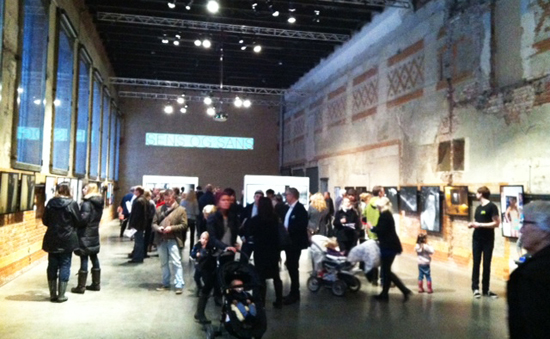
A strong exhibition of photographs in the very good exhibition space in DogA where many strong design and architecture activity takes place. Here are a few images from the event.
December 18, 2012
Posted in: ART, DESIGN No Comments
THE WORLD OF THE PRINTED MEDIA
I have been wondering what is happening to the newspapers. Something that I have enjoyed all my life and they are kind of dying now with the introduction of all the new ways of communicating. Most of the stuff that comes through my front door today is rubbish post with advertising for things that I never need. The Economist posted some interesting stuff about what is happening saying goodbye to one German Paper FTD, that many of us know.
They say: “more and more people, especially the young, are getting their news online, mostly for nothing. Print advertising is dwindling, and online ads are failing to make up the difference.”
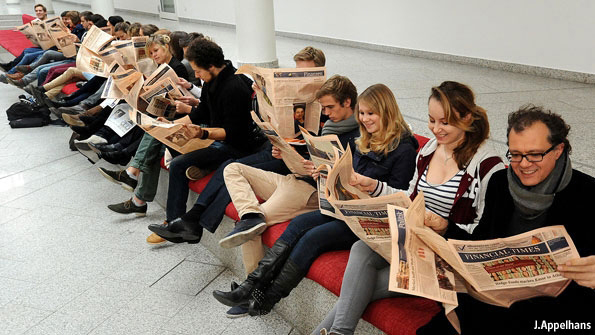
We in the design schools have been teaching print and presentation on paper and many still do while maybe only in few years there will be no more newspapers. If interested look at the link I put in here.
December 14, 2012
Posted in: DESIGN, PONDERINGS, SUSTAINABILITY No Comments
FIRST GRADUATION IN ISARC – FIRST ACADEMY OF ART AND DESIGN IN MOZAMBIQUE
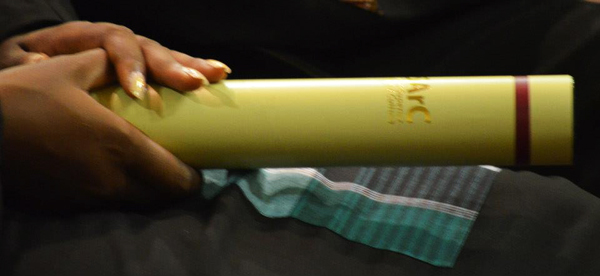
There are happy and fundamental days for the first graduation in ISArC in Mozambique. The program has run over three years now and the first graduation took place on Friday 30th of November 2012!
Congratulations to all! Here are some images from the event!
Here are some images from our work there over the time.
Today it is over six years since I met for the first time Mr. Victor Sala from Mozambique when he came for a visit to my office in Oslo when I was running the Faculty of Design there.I have the notes from our meeting that took place on September 6th 2006, so time does really pass fast when one is enjoying life. Mr Sala has been involved in running a dance project supported by Norwegians in Mozambique. That is an other story but explains our encounter. One of my students had asked to be allowed to do a short visit to Maputo because her mother ran the Norwegian support program for the youth in Mozambique. I guess they managed to get travel funds also for the daughter. I remember best that I was not so keen on going South because I had just returned from other foreign travels and wanted to spend my time with the family. I kind of went there gruntling but also thought: “Maybe this becomes something good like the parties that one does not like to go to and then become the best parties of all!?� And this is how things turned out. I will report a bit about our work together. The students and administrators and teachers locally have been great to work with and one is finally proud that the students have finished the complete BA program there.
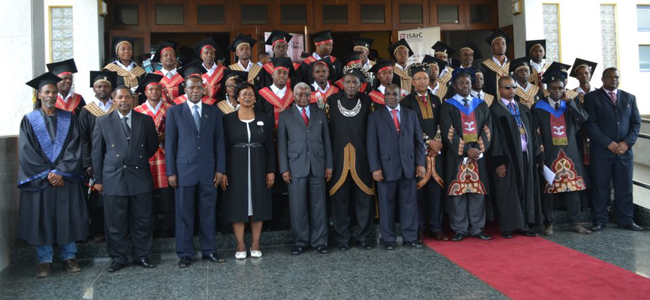
The classic academic group with president Gebusa and rector Meigos in the centre.
December 6, 2012
Posted in: AFRICA, ART, DESIGN, FASHION, ISAC - KHiO, MOZAMBIQUE Comments Closed
DESIGN MARKET FOR XMAS IN ICELAND
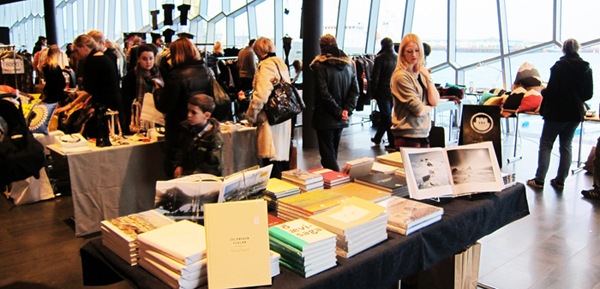
Regularly designers in Reykjavik run their market and especially now just before Xmas is there time to offer new designs and solutions. I popped over to their market last weekend to meet up many past students and to evaluate what new people are offering. Here are a few simple images from the event.
December 5, 2012
Posted in: DESIGN, FASHION, ICELAND, SUSTAINABILITY Comments Closed
REUSE OF MATERIALS AND KNITTING FOR FASHION

I spent many times with my grandmother who knitted all the time, making mittens, socks and various other traditional clothing. Icelandic wool was and is still the indigenous material for Icelandic clothing and actually fashion. It comes from the traditional sheep that the Vikings brought with them from Northern Scandinavia. I still have some pairs of traditional Icelandic mittens out of Icelandic wool crafted into the eight leaf rose that has been tradition in Icelandic pattern for over one thousand years. Apparently this patterning comes from South, through the travel of the Vikings to Istambul through the rivers of Russia.
Knitting was a strong tradition and many friends and families are  still linked to making warm clothes and now sometimes more fashionably developed clothing.
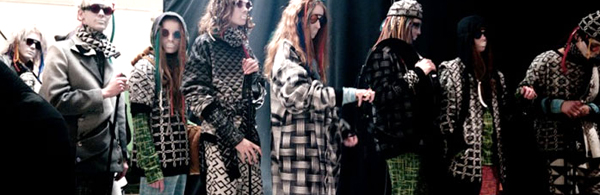
Mundi Fashion LIne
Good friend Mundi makes cool pants and linked fashion from knitted stuff. Here is a link to his stuff. People are experimenting greatly in this tradition, also for the recycling of the clothes or the textile materials like Imogen Hedges who has made a tool for redeveloping the textile on a textile tool. This is similar to what was used in my youth, a traditional tool with the name of Rokkur.

Imogen Hedges spinning
Here is a more advanced tool for working yarn or wool, sitting in comfort and spinning. Here is a link to this great theatrical tool. Imogen Hedges sits at it preparing the yarn for knitting, posted in the greatly informative website Trehugger
 Something I did with my granny but not with such a fancy tool but using an Icelandic Rokkur. Here on the side is a photo of the traditional wool spinning tool Rokkur. Mellow memories!
November 23, 2012
Posted in: DESIGN, FASHION, GREENLAND, ICELAND, SUSTAINABILITY Comments Closed
